This Friday, the biggest IPO in history hits the Nasdaq, and I am not planning to buy on day one. The company is SpaceX, listing under the ticker SPCX. If the term is new to you, an IPO, or initial public offering, is simply the first time a private company sells its shares to the public, the moment ordinary investors can finally buy in.
I have nothing against SpaceX as a business. Long term, I actually like it. But how you buy into a launch this loud matters as much as what you buy, and the way most retail investors will approach this is the part that gives me pause. Here is how I am thinking about it.
I broke this down as a carousel too. Swipe through:
Follow me on Instagram for more breakdowns like this.
What you're actually buying
Everyone keeps calling it the Starlink IPO. What actually lists is SpaceX, and Starlink sits inside it. Starlink is the satellite internet arm, and it is the part that pays the bills, more than $11 billion in revenue last year. Buy SPCX and you own all of it: the rockets, Starlink, and the newer, cash-hungry AI and compute side.
Of $18.7 billion in total 2025 revenue. Roughly six of every ten dollars come from Starlink beaming internet down from orbit.
The biggest IPO in history
The scale is hard to overstate. SpaceX is targeting a valuation of around $1.75 trillion and looking to raise up to $75 billion. That would be the largest IPO ever by a wide margin, and it would put SpaceX among the ten most valuable companies on earth on its very first day of trading.
Here is the part the excitement skips over. The filing shows $18.7 billion of revenue last year, but also a $4.9 billion net loss. So you would be paying a top-ten-company price for a business that is still losing money on paper, with a lot of future growth already baked in. To me, it looks expensive. I will also be honest that nobody actually knows where this trades on day one, and I have been wrong on hot names before.
The exit-liquidity trap
This is the part I would want a friend to understand before they tap buy. When a company is this hot, everyone wants in, and that is usually the moment retail becomes the exit liquidity.
A big chunk of any IPO is early backers, employees and pre-IPO funds turning years of paper gains into real cash. They got in at a fraction of today's price. The money arriving at the listing is who they sell into. Someone has to be on the other side of that trade, and at a launch this loud, it is often the people who showed up last.
It is when the new money buying at the listing provides the cash that lets the early money cash out. The hype gets retail to show up exactly when the people who got in cheap want to sell.
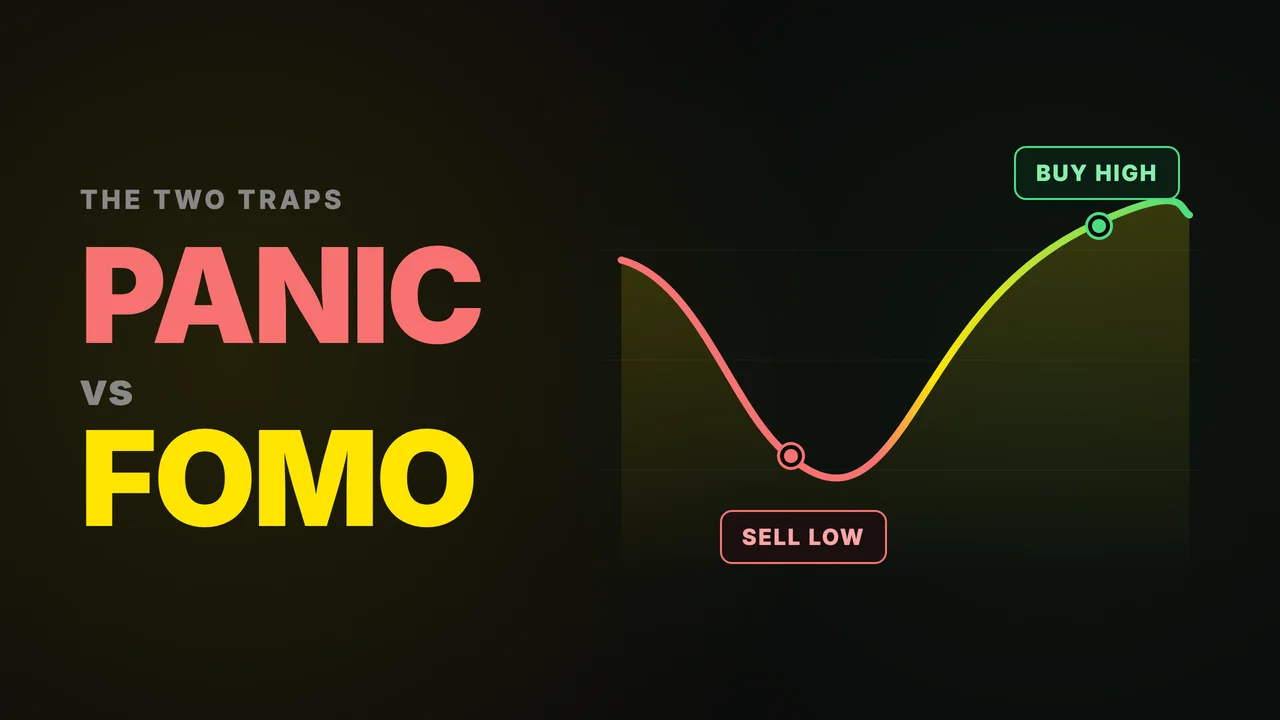
It is the same psychology I wrote about in panic selling vs FOMO buying. The fear of missing out is doing a lot of the buying here, and FOMO is rarely a good reason to pay any price.
Why I'm not buying on day one
So personally, I am in no rush. A first-day listing tends to be volatile. The spread you pay in the first hours can be wide, and the opening price moves on headlines as much as on the business. I would rather watch the first few days, let the noise settle, and see what a calmer entry looks like than chase the open and hope.
That is a personal preference, not a call on the stock, and yes, it might mean missing an early pop. I am fine with that.
If you are more worried about what SpaceX joining the major indices does to your tracker than about buying it directly, I covered that separately in will the SpaceX IPO break your index fund? The short version: in a broad index, it lands as a pebble, not an asteroid.
What I actually look for: the moat
Long term, I do like the position SpaceX is in, and for me it comes down to one thing: the moat. I want to own businesses that are genuinely hard to copy.
SpaceX has that. It operates more satellites than everyone else combined, with a launch capability no rival can stand up quickly.
That kind of lead is the opposite of, say, Tesla, which I never bought. I could never convince myself the moat was strong enough once every carmaker started building EVs. With SpaceX and Starlink, the lead is much harder to challenge. It is the same lens I used when I sold my ETFs and bought individual stocks: own the businesses with a real edge, skip the ones without one.
What would make me buy
None of this means I will never own SpaceX. If I like a business for the next decade, I do not need to own it in the first ten minutes. I would rather let the dust settle, watch a few real trading days and ideally an earnings report or two as a public company, and then build a position slowly if the price makes sense.
Missing the first move is not the same as missing the story. Friday will be loud either way. Try not to let the noise make the decision for you.
Frequently Asked Questions
SpaceX lists on the Nasdaq this Friday under the ticker SPCX. It is selling Class A common stock to the public for the first time.
No. Starlink is not listing on its own. It sits inside SpaceX as the satellite internet business that drives most of the revenue, so when you buy SPCX you own Starlink along with the rockets and the AI and compute side.
SpaceX is targeting a valuation of around $1.75 trillion and raising up to about $75 billion, which would make it the largest IPO in history and one of the ten most valuable companies in the world on day one.
That is a personal decision, and this is not financial advice. My own approach is to wait. First-day listings are volatile, the spreads are wide and the price moves on headlines. I would rather watch the first few trading days and look for a calmer entry than chase the open. Do your own research and only invest what you can afford to lose.
Disclaimer: This article is for educational purposes only and does not constitute financial advice. When investing, your capital is at risk. You may get back less than you invested. Past performance is not a guarantee of future results.