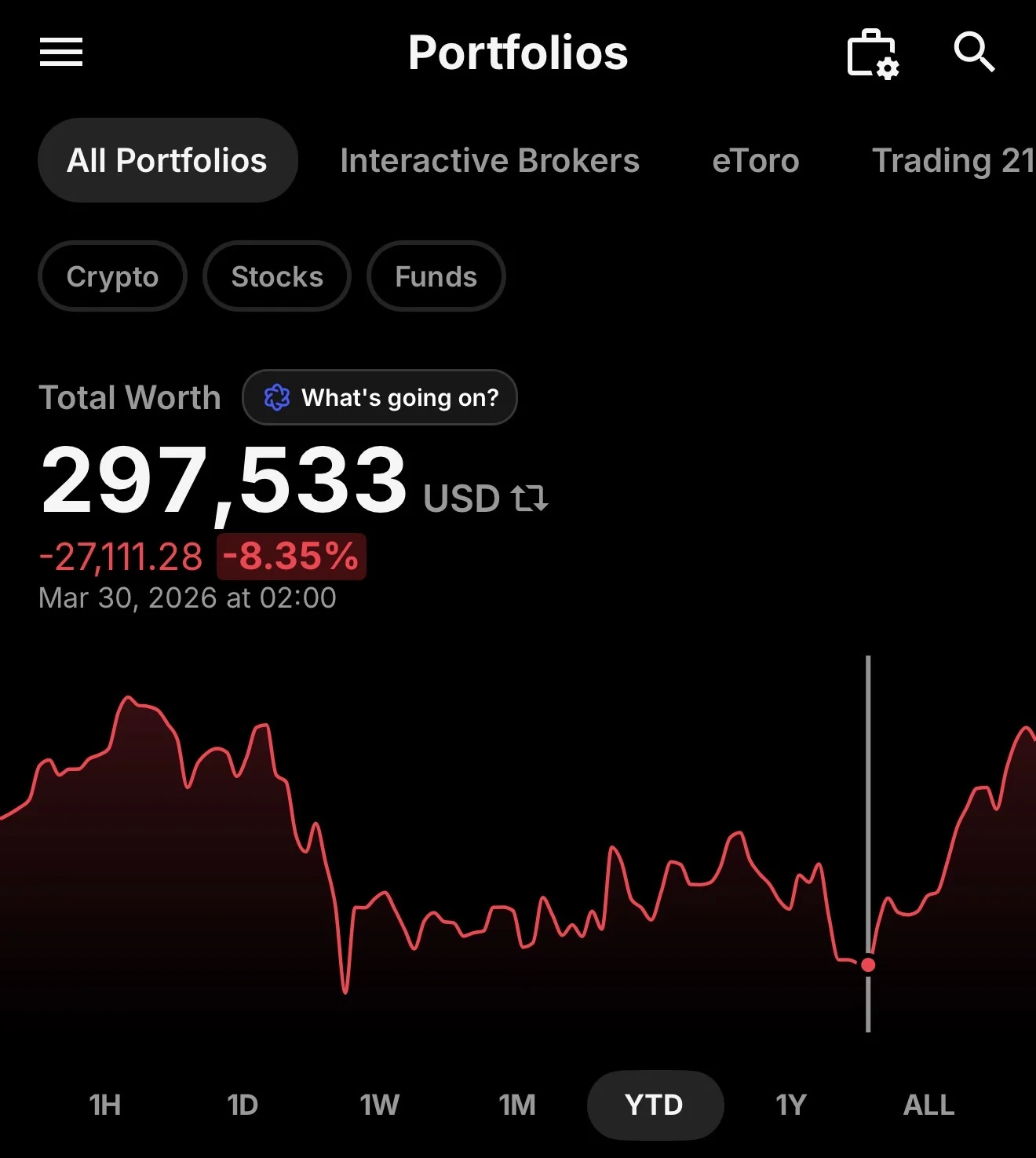
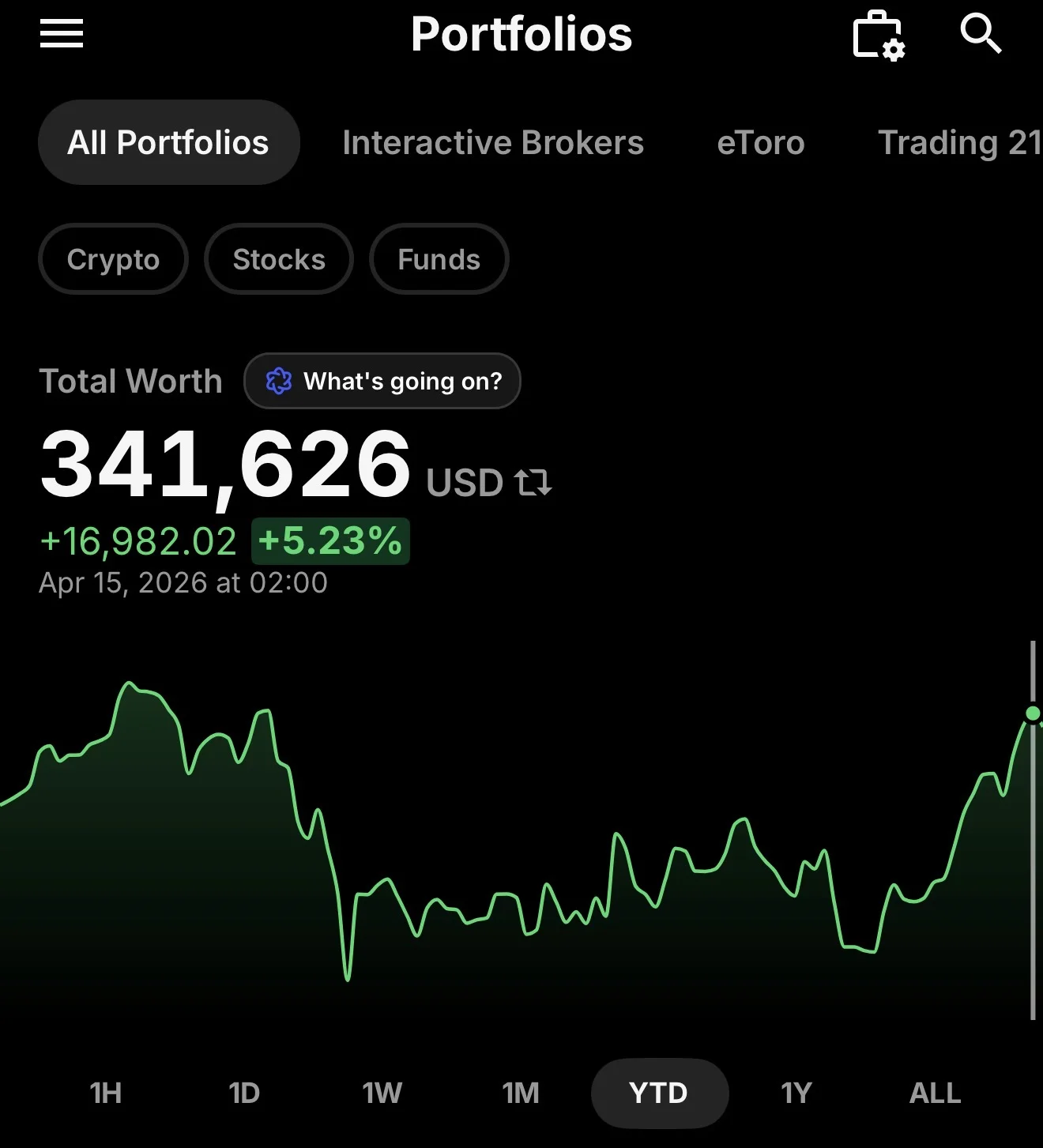
Two weeks ago my portfolio was worth $297,533. Yesterday it was worth $341,626.
That is a $44,093 jump in 16 days. No new cash added. No trades rotating in or out. Same holdings, same allocation, same strategy. Just time.
I am writing this because last week I wrote about not chasing the rally, and the week before that I wrote about not panic selling through the drawdown. This is what the other side of that discipline actually looks like. Boring. Slightly anticlimactic. And $44,093 higher than it was two weeks ago without me doing anything reactive.
What I watched other people do
While my portfolio was red, I watched people around me do all sorts of things.
Some panic sold. Out of tech "because the AI trade is over". Into oil "because the Strait of Hormuz is closed forever". Into gold "because inflation is coming back". Then two weeks later, with oil cooling and tech ripping, the same people are quietly trying to get back in.
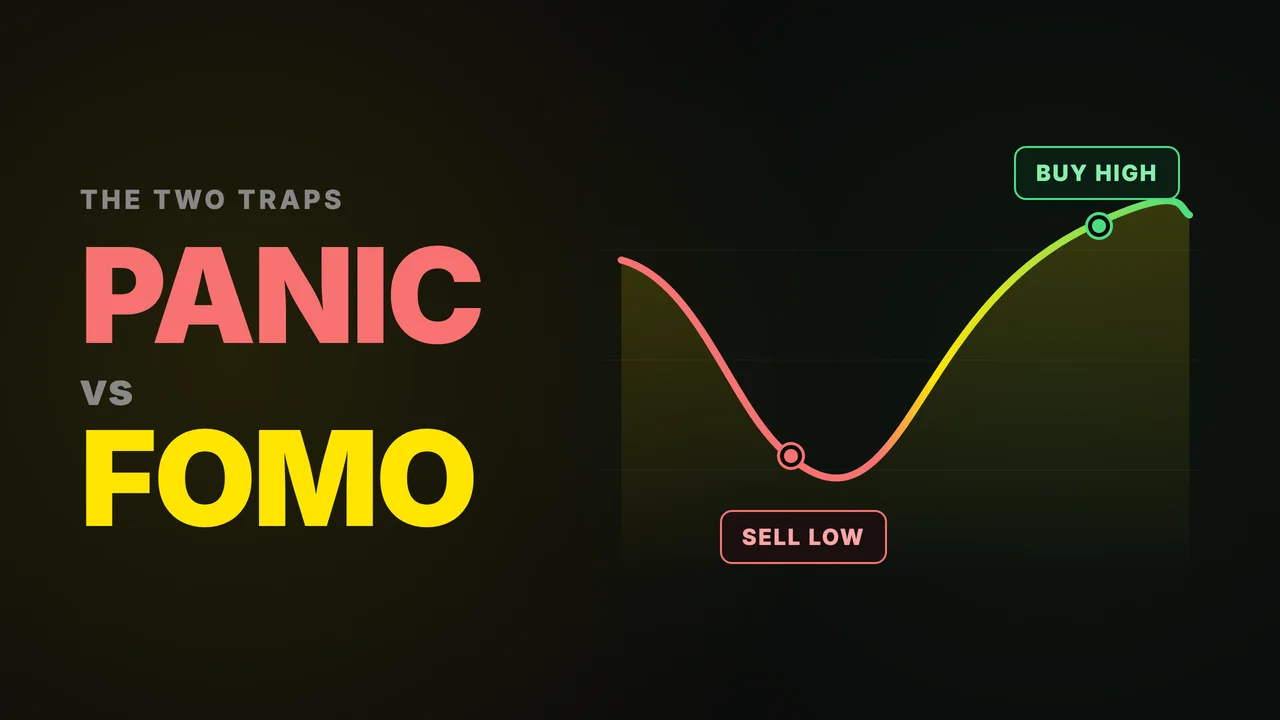
That is not investing. That is trading. And trading is a skill that is genuinely hard to do well, consistently, for years. Most people who try it lose money to the people who are actually good at it. I am not good at it. I do not pretend to be. If you want a fuller breakdown of this pattern, I wrote about the two traps of panic selling and FOMO buying right before this rally started.
Others did the opposite thing. They moved to the sidelines. "I will wait for the bottom, then jump back in." The problem is the bottom does not ring a bell when it arrives. Look at the chart. The low was Mar 30. Two weeks later, the same portfolio was $44,093 higher. Anyone who went to cash on Mar 29 with a plan to "wait and see" is either still waiting, or buying back in higher than where they sold.
A paper loss is just a number
That is the whole game. A paper loss only becomes a real loss the moment you sell.
When my portfolio was down $27,111, it felt like $27,111. It was not. It was a snapshot of where the market happened to be pricing my holdings on one specific Monday. Two weeks later that same snapshot is worth $44,093 more. Nothing about the underlying businesses changed in 16 days. The mood did.
A paper loss is a snapshot of where the market happens to be pricing your holdings on one specific day. It only becomes a real loss the moment you sell. The businesses underneath did not change. The mood did.
This is why "time in the market beats timing the market" is not just a catchy saying. It is the one rule that reliably works for regular investors who have day jobs, families, and no edge on the next macro headline. You do not need to be right about oil, rates, or elections. You need to still be holding when the market decides to print a green candle. I have written before about how the first $100k is the hardest, and the core reason is exactly this. Compounding only works on the money you leave invested.
What I actually did during the red weeks
Here is the part I want to be honest about. "Did nothing" is not quite right. I did not do anything reactive, but I did lean in.
Last month was my biggest buying month of the year. While prices were down, I added to my core positions. Most of that buying went through Interactive Brokers, which is where I run all my core ETF buys. Not because I was calling the bottom. I have no idea where the bottom is and neither does anyone else. But if I am going to hold these companies for 10, 20, 30 years, the logic of buying them on sale is pretty simple. Cheaper shares today mean more shares for the same cash, and more shares compounding over decades.
That is the move I want to normalise. Not "predict the bottom." Just "do not flinch, and if you have the cash, add a bit more than usual when things are ugly."
About the luck
I want to be careful here, because I do not want to sound like one of those guys who post a screenshot after a good two weeks and claim they saw it all coming. I did not. Nobody did.
There is a line I like. The more disciplined and focused you are, the luckier you tend to get. Discipline does not make you right about the market. It just means you are still in the game when the lucky breaks happen. If you panic sold on Mar 30, no amount of luck this month helped you.
It is also entirely possible that by the time you read this, some new political headline hits and my portfolio drops another 10 or 20%. Genuinely. That is part of investing. If it happens, I am not going to sell, I am probably going to add again, and in a year or three this week will be another forgotten wiggle on the chart. That is not me being smart. That is me being a long-term investor. I cannot predict the market. That is exactly why I am telling you not to try to time it either.
The mistake I learned to stop making
I am not writing this from the high ground. I have made plenty of mistakes. I once wrote about losing $52,000 in a single week, and more broadly about the investing mistakes I see trip up most beginners. The one I have worked hardest to stop making is reacting to situations instead of staying on course. Selling something on a scary headline. Pausing my monthly buys because "it feels like a bad time." Sitting in cash waiting for a clearer picture that never actually arrives.
The better version of me uses those red moments to add, not retreat. That version is usually $44,093 richer 16 days later.
The quiet lesson
The investors who build real wealth are not the ones who nailed the bottom on Mar 30. They are the ones who, on Mar 30, were not doing anything different than they were on Mar 1. Or Apr 15. And if anything, they were quietly buying more while everyone else was panicking.
That is the boring answer. It is also the one that actually works.
Frequently Asked Questions
If you are a long-term investor with a strategy you believe in, a drawdown is exactly when buying makes the most sense. Cheaper shares today mean more shares for the same cash, and more shares compounding over decades. The hard part is not predicting the bottom. The hard part is not flinching when everyone around you is panicking.
You do not. Nobody does. The bottom only becomes obvious in hindsight. That is why trying to time the re-entry usually ends with investors buying back in higher than where they sold. The workable rule for most people is not "buy the bottom," it is "keep buying on a schedule, and if you have extra cash, lean in a bit harder when things are ugly."
No. A paper loss is a snapshot of where the market is pricing your holdings on a given day. It only becomes real the moment you sell. Between Mar 30 and Apr 15, 2026, my portfolio moved from $297,533 to $341,626. Nothing about the underlying businesses changed in 16 days. The mood did.
Four things. First, do not sell on a scary headline. Second, do not pause your monthly buys because it "feels like a bad time." Third, if you have spare cash, add a bit more than usual. Fourth, turn off the news if it makes you more likely to do something reactive. The goal is to still be holding when the market decides to print a green candle.
Disclaimer: This article is for educational purposes only and does not constitute financial advice. When investing, your capital is at risk. You may get back less than you invested. Past performance is not a guarantee of future results. This article contains affiliate links, meaning I may earn a small commission if you sign up through them, at no additional cost to you.