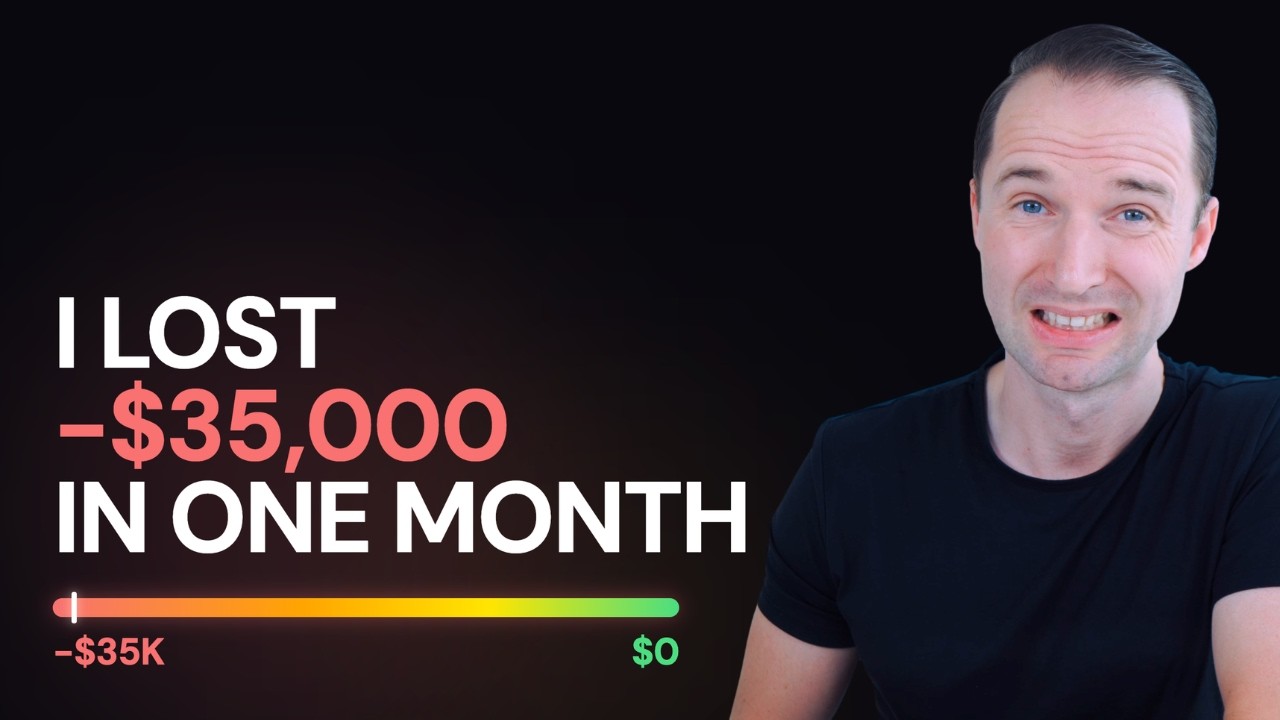
In late January 2026, my portfolio peaked at around $370,000. Just one week later, it had dropped to roughly $316,000. That is a $52,000 loss in a matter of days. It was one of the worst weeks I have experienced as an investor in terms of raw dollar value. And yet, I did not sell a single position. In fact, I did the opposite. Here is exactly what happened, what caused the sell-off, and why I chose to keep buying.
What My Portfolio Looked Like Before the Drop
To put the loss into context, I started tracking my portfolio in 2023 with about $46,000. Through consistent contributions and strong performance, it had grown to the $370,000 mark by mid-January. Even factoring in contributions, my portfolio was outperforming the S&P 500 by roughly $42,000, or 14.5%. That outperformance came from a concentrated, growth-focused strategy with heavy exposure to individual tech stocks and Bitcoin.
When the correction hit, the damage was not evenly distributed. Some holdings actually gained ground. ATI, my most recent addition, was up 11% during the same period. TSM also held up well. But those were smaller positions. The real pain came from my largest holdings, and especially from Bitcoin.
What Caused the Sell-Off
There was no single catalyst. It was a combination of factors piling on top of each other within a very short window.
Amazon Earnings Misread
Amazon, my single biggest stock holding, dropped nearly 13% in five days following its earnings call. The irony is that the results were actually very strong. Revenue was up year over year, expectations were beaten across most metrics, and the business was firing on all cylinders. The issue was capital expenditure. Amazon announced plans to spend $200 billion on capex going forward, up from the expected $150 billion. The market punished it immediately.
The gap between what a company reports and what its share price does next is worth understanding on its own, and I set out how I separate an earnings report from the first share-price reaction in a separate article.
I see this differently. A company reinvesting aggressively into AI infrastructure, logistics, and future growth is playing offense. If Amazon had instead announced massive share buybacks and slashed spending, the stock would have surged short-term, but the long-term competitive position would weaken. I would rather own a company that invests in the future than one that optimizes for the next quarter.
Bitcoin Down 30%
Bitcoin was the single biggest drag on my portfolio during this period. Over a one-month window, it was down roughly 27%, and over three months, the decline reached 32%. This happened while gold and silver were hitting new all-time highs, which made the contrast especially painful.
Several forces drove the sell-off. ETF outflows were significant. When markets turn negative, investors pull money out of higher-risk assets like Bitcoin ETFs. Those providers then sell their Bitcoin holdings, adding further selling pressure. On top of that, leverage liquidations created a cascading effect. Many traders use borrowed funds to amplify their positions, and when the price drops past certain thresholds, brokers force-close those positions. This creates a domino effect of forced selling that accelerates the decline.
MicroStrategy and the Leverage Problem
MicroStrategy (now Strategy) was a perfect example of what leverage risk looks like in practice. Their stock was down nearly 60% over a one-year period, performing even worse than Bitcoin itself. Michael Saylor's average cost basis sat at $76,000 per Bitcoin while the price had fallen to $68,000, putting the company down roughly $5.6 billion. If someone with that level of conviction and resources can be underwater, it is a good reminder that nobody can predict short-term price movements.
What I Actually Did
Inside my eToro account, my largest single brokerage, the portfolio dropped from close to $95,000 to as low as $89,000 in just a few days. My plan going into February was to dollar-cost average my monthly allocation across four weekly buys. But with prices this low, I changed my approach.
I deployed 90% of my monthly investing allocation within a few days to capitalize on the dip. The reasoning was simple: fundamentally, nothing had changed about the companies I own. Amazon was still growing. NVIDIA was still leading AI chip development. Micron's production was fully booked. The prices had just gotten significantly cheaper. I followed the same playbook again during the March 2026 drawdown, which turned out to be my biggest buying month of the year.
Within days of buying, most of those new positions were already in the green. NVIDIA was up over 8%, Micron up 7.5%. That quick recovery reinforced my conviction that the sell-off was driven by sentiment, not fundamentals. That said, not every dip is worth buying. I recently explained why I think software stocks may not bounce back to their old valuations.
Why I Did Not Buy More Bitcoin
Despite the attractive price, I deliberately chose not to add to my Bitcoin position. The reason is portfolio balance. Bitcoin was already a significant portion of my total holdings. At one point, crypto made up roughly 70% of my portfolio. Through consistent stock investing and Bitcoin's price decline, the split had shifted to about 56% stocks and ETFs versus 44% crypto. I was happy with that rebalancing and did not want to reverse it.
I still believe in Bitcoin long-term. Tokenization of traditional assets, favorable regulation, and growing institutional adoption all point in a positive direction. But position sizing matters. Even the most attractive asset becomes a risk if it dominates your entire portfolio. I wrote more about why diversification is so important during a crisis and how I approach it across all my accounts.
My Custom eToro API Dashboard
I also wrote about why I stopped checking my portfolio during the recent oil crisis, and how stepping back actually helped my mindset. One thing that helped me stay calm during this volatile period was having clear visibility into my portfolio. eToro recently launched their own API, and I built a custom dashboard that pulls real-time data from my account. It shows equity positions, portfolio weighting, market hours across different time zones, and performance metrics at a glance.
Having that kind of clarity makes it easier to make rational decisions when prices are falling. Instead of reacting emotionally to a red screen, I could see exactly where my portfolio stood relative to my long-term targets and make deliberate choices about where to deploy capital.
The Bigger Picture
When I look at the long-term chart, the perspective shifts entirely. Starting from $46,000 in 2023, the portfolio has grown substantially. Yes, there was a painful week. But that week looks like a small dip on a much larger upward trend. More importantly, I outperformed the S&P 500 by 14.5% over the same period, even with the correction hitting my concentrated portfolio harder than the index.
I slept fine through the entire drawdown. Not because I enjoyed watching the numbers go down, but because I had no leverage, no margin calls, and no forced selling triggers. If Bitcoin dropped to $20,000, it would hurt, but I would not be liquidated. That is the advantage of investing only with capital you can afford to hold for the long term.
Key Takeaways
- Fundamentals over sentiment. The market overreacted to Amazon's earnings and the broader risk-off move. The businesses behind my holdings did not change.
- Accelerate when others panic. Instead of my usual weekly dollar-cost averaging, I front-loaded 90% of my monthly allocation during the dip.
- Avoid leverage. The MicroStrategy example shows how leverage amplifies losses. Staying unleveraged meant I had no liquidation risk.
- Respect position sizing. Even though Bitcoin was cheap, I did not add more because it was already too large a share of my total portfolio.
- Build tools for clarity. My custom eToro dashboard gave me the data I needed to make calm, informed decisions during a volatile week.
Anyone who tells you they can predict when these corrections will happen is not being honest. What you can control is how you respond. For me, that means having a plan, sticking to fundamentally strong companies, and treating sharp declines as buying opportunities rather than reasons to sell. I wrote a more detailed breakdown of the two traps in volatile markets, panic selling on the way down and FOMO buying the bounce, which are two sides of the same mistake. The flip side of the same psychology is price anchoring, why stocks feel too expensive once they recover, and why that feeling is usually wrong.
Two months later, April delivered the biggest single-month gain I have ever recorded, +$73,000, exactly the kind of rally you only catch if you are still in the market. The full broker-by-broker breakdown is in my April 2026 portfolio update.
Disclaimer: This article reflects my personal investing experience and is not financial advice. When investing, your capital is at risk. You may get back less than you invested. Past performance is not a guarantee of future results. Always do your own research before making investment decisions.