Alphabet Grew Revenue 24 Percent and the Share Price Still Fell
Alphabet reported its second quarter results on 22 July 2026. Revenue rose 24 percent year over year, which came in ahead of analyst expectations. In the next regular trading session, the shares fell 7.1 percent.
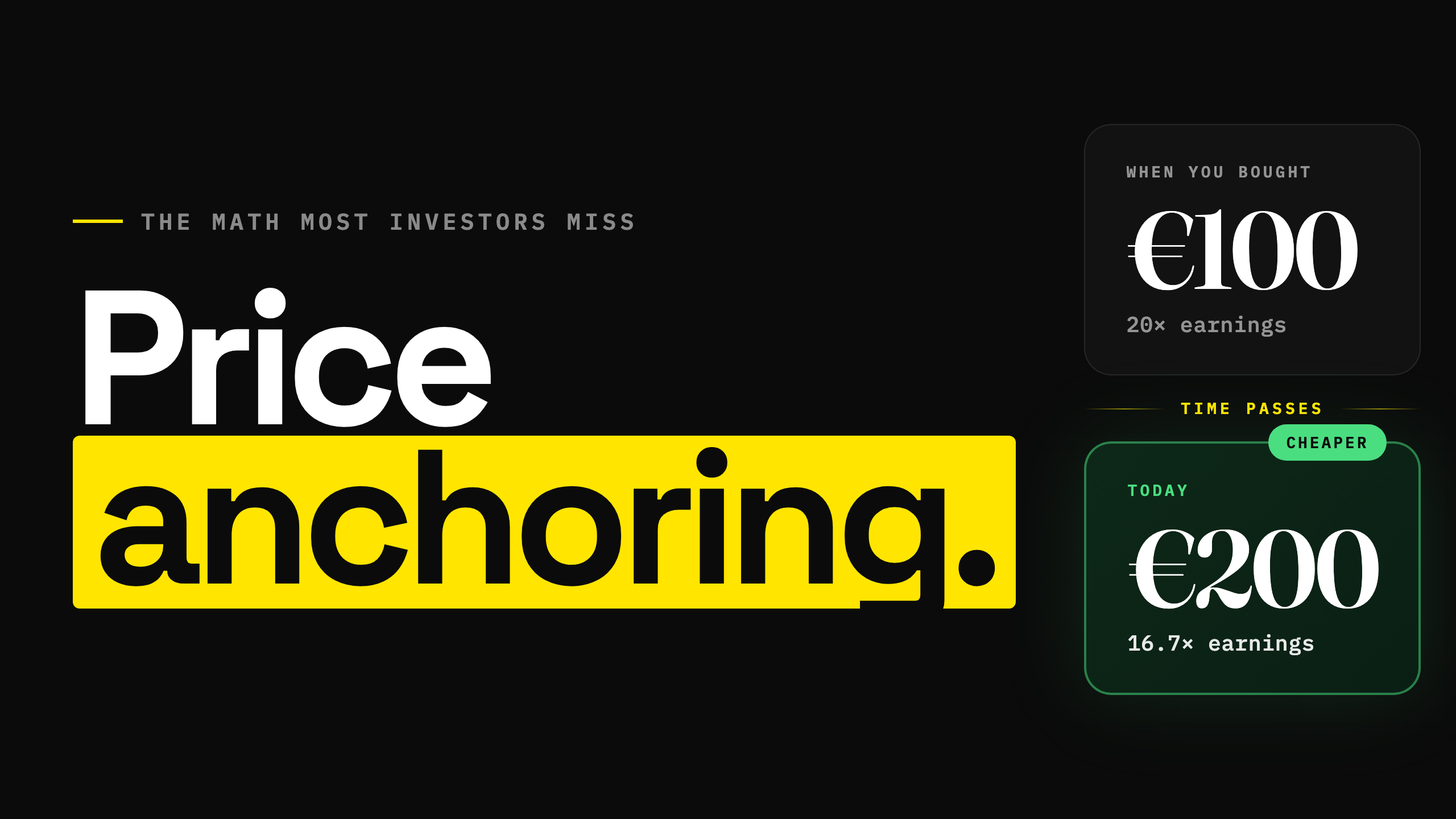
The share price does not respond to the reported results alone. It responds to the distance between those results and what investors already assumed they would be. Analysts publish estimates ahead of the release, traders take positions around them, and the valuation itself carries assumptions about growth, spending, and profit for years ahead. A company can clear the published revenue estimate and still land under the expectation priced into the stock, or raise a new concern that outweighs the figure everyone was watching. With Alphabet, reporting connected the reaction to higher capital spending and the pressure that puts on free cash flow.
One report, two different readings
The first number describes the business. The second describes how market expectations changed.
Good companies often trade at prices that already assume good news, which is part of why strong results can still disappoint the market. I wrote about that gap in Why Good Stocks Always Feel Too Expensive.
The move after a report tells you how expectations shifted. It does not settle where the business is heading over the years you plan to hold it. Learning how to review a stock after earnings starts with keeping those two readings apart.
Treat Each Report as an Optional Checkpoint
An earnings report is an opportunity to look at a company you own. It is not an instruction to reassess your reasons for owning it. Most reports come and go without changing anything about why a holding sits in the portfolio, and that is a normal outcome rather than a sign you were not paying attention.
The useful question is whether the business changed, not whether the share price moved.
Reporting schedules differ by market and by company. The rhythm matters less than what you do with the material when it arrives.
Investor.gov, the investor education site run by the SEC, describes corporate reports as showing whether a company is making or losing money and why. For someone holding for years, the "why" carries most of the value. The figures describe what happened. Management's explanation tells you whether what happened was planned.
A checkpoint needs a reference point, and mine is the reason I bought the company in the first place. That reason comes out of the work I do before buying, which I set out in How I Research a Stock Before I Buy It. Without it, the review has nothing to measure against, and it turns into a reaction to the share price, which is the one number in the story the company did not produce.
Three Questions Worth Asking When Something Changes
I do not run a full review of my reasons for owning a company every time it reports. That would be a lot of work for very little new information. When a report shows a meaningful change, or leaves me with a question I cannot answer from the release, I step back and look at the holding properly.
One question sits above the others: is this company still becoming the business I thought I was buying? Three smaller questions get me to an answer.
Does the long-term vision still make sense? The direction a company describes should hold up in the world as it looks now, not only as it looked on the day I bought. Industries shift, and a competitor can make a strategy look dated within a year. If the vision no longer stands, the figures in the release matter far less than that.
Is management executing against that vision? Here I compare what management said in earlier reports with what the company has delivered since. Did the projects described a year ago arrive? Are the priorities from back then still the priorities, or has the story been rewritten each time it got difficult? The gap between what management says and what a company does is one of the few things a private investor can judge without special access.
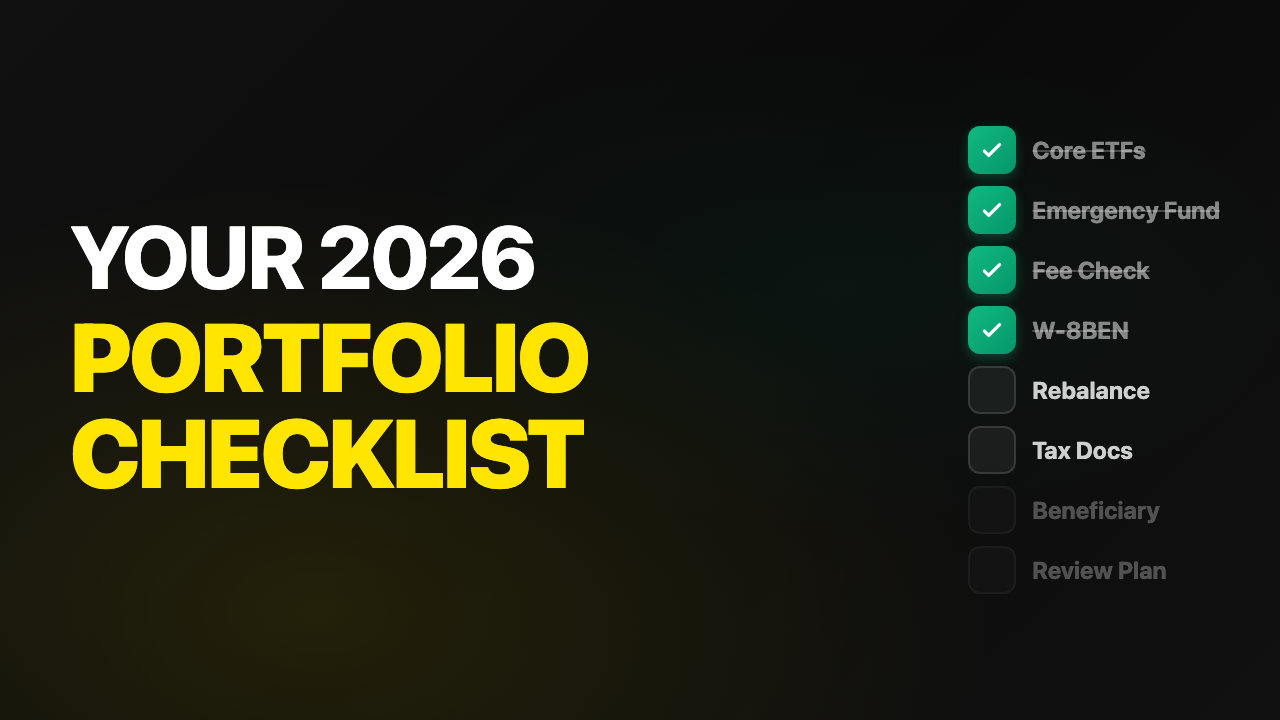
Does the holding still fit what I want from my portfolio? A company can be performing well and still sit awkwardly in a portfolio, either because the position has grown larger than intended or because it overlaps with something else already held. I use Your 2026 Portfolio Checklist to run that check across everything I own.
Look for a Pattern Across Several Reports
One set of results carries a lot of noise. A product launch can pull revenue forward. A currency move can distort a comparison. A one-off cost can sink an otherwise ordinary period. The period being compared against may have been unusually strong. None of that reveals direction.
Repetition does. When the same weakness appears across three or four reports and management's explanation for it changes each time, the sequence says something no single release could. The reverse holds as well. A company that keeps doing what it said it would do, report after report, is telling you something about how it is run.
From noise to evidence
That comparison is easier when you have something to compare against. Saving a few lines from management's comments after a report makes it simpler to check later whether what was described actually arrived.
Long-Term Investors Are Allowed to Change Their Minds
Companies change, and so do the industries around them. The opportunity that made a holding attractive can be competed away or regulated away.
A long-term investor can update a view when the evidence about the business changes. Volatility on its own does not make that decision.
After a report, a holding tends to sit in one of three places. Nothing in it disturbs the reason you own the company, which is the usual outcome. Something in it raises a question, in which case the useful step is writing down what you want to see in future reports. Or the evidence points to a company drifting from the one you researched, and that deserves proper work: reading back through earlier reports and checking what competitors are doing, away from the noise of the week.
Keep the report in context and move on.
Write down what future evidence would answer it.
Do the deeper research away from the week's noise.
No single report settles any of this. It can open the question and point you toward the research that answers it.
Go to the Company First, Then to the Call
Learning how to read an earnings report gets easier when you start where the information originates.
I begin with the company's investor relations page. The results release and the accompanying presentation come from the company itself, before any commentary, and they cost nothing to read. Starting there means the first impression comes from the source rather than from a headline written to be clicked.
The earnings call comes next. The prepared remarks are useful, and the analyst question and answer session is often more useful, because analysts ask about the parts of the period the presentation moved past quickly. Hearing management handle a difficult question tells you something a written summary cannot, including whether they answered it at all.
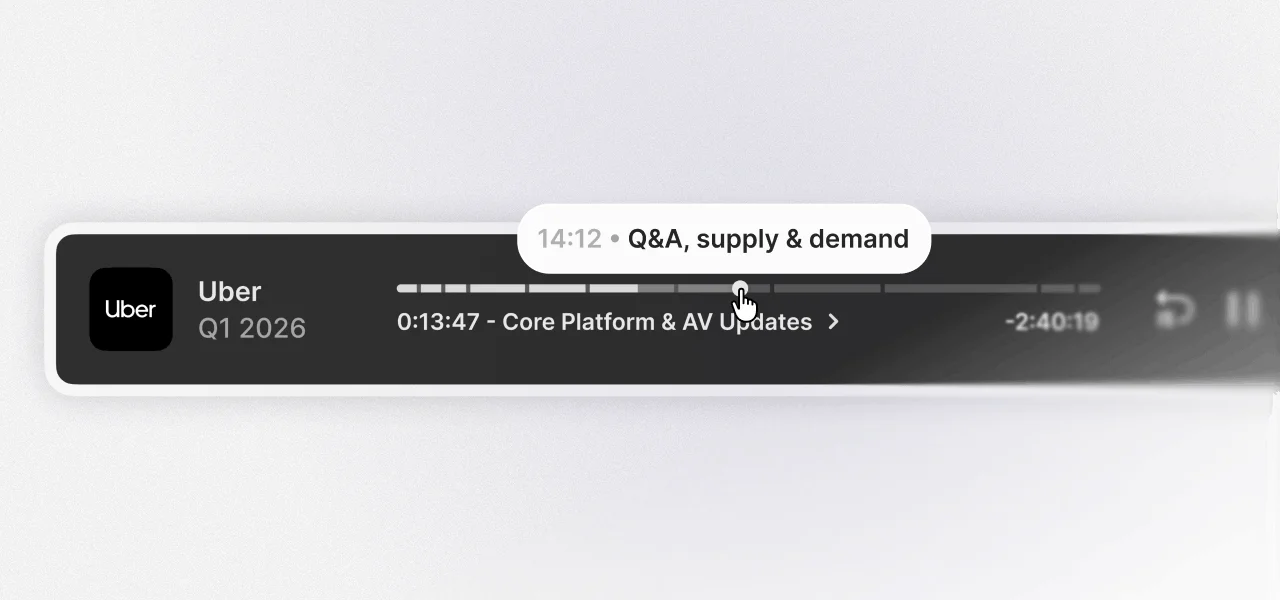
I listen through Quartr, a mobile app with live calls and transcripts. It is the easiest way I have found to follow a call without sitting at a desk. It is free, and this is not a sponsored mention.
For US-listed companies there is a further layer available if you want it. Investor.gov notes that a quarterly Form 10-Q contains unaudited financial statements and information covering the previous three months. Open it when a specific question sends you there. It is not required reading for every investor after every report.
My review order
These bars show review order, not statistical weights.
A Simple Routine for After the Results
Listen to the call, or read the transcript when the timing does not work.
Note what changed. A new priority, or a different tone on a question that used to get a confident answer, is the kind of detail worth carrying forward, and it is easy to lose by the time the next report arrives.
Compare what you noted with the reason you bought the company. This step keeps the review honest, because it stops you from rebuilding your reasoning around whatever the company happened to report.
Then keep the price move in its place, as information about expectations rather than as the thing that makes the decision for you. A sharp fall is uncomfortable, and it can be lived through without acting on it. I wrote about staying focused through one in I Lost $52,000 in One Week.
Frequently Asked Questions
No. Reading the results release and presentation is enough to stay current with a long-term holding. I listen to the call when something in the business has changed or when I have a specific question the written materials do not answer.
A single report cannot confirm or break the reasons you own a company. It is one piece of evidence, and the useful work is understanding what caused it and whether management expects it to continue. Any decision about a position sits better on a pattern across several reports and on research into the business than on a price reaction.
Start with the company's own results release and presentation on its investor relations page. They are short and written to be understood. Add the earnings call once the release feels familiar, and open the regulatory filing when a specific question sends you there.
There is no fixed number of reports. One soft period with a clear and consistent explanation says little on its own. Three or four in a row, with explanations that keep changing, is a different situation and is worth proper research.
This article is for educational purposes only and does not constitute financial advice. When investing, your capital is at risk. You may get back less than you invested. Past performance is not a guarantee of future results.