In one week I made two decisions that look like they contradict each other. I held on to my biggest winner and refused to trim a single share. And I sold a different position at a loss, a company I still think is well run.
Both came from the same place. Picking a stock is not one decision, it is two, made over and over. Is this a good company, and is this a risk I actually want to carry. Those are not the same question, and this week pulled them apart for me.
The winner I am holding
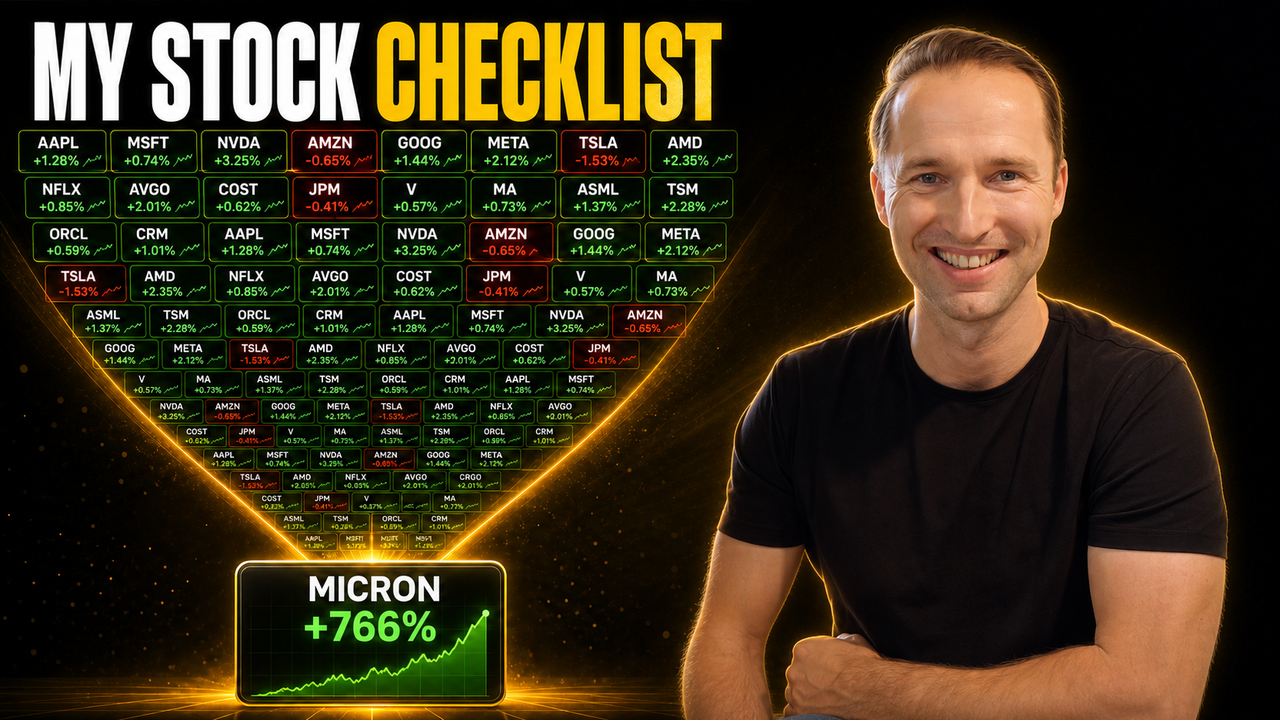
Micron makes the memory chips that sit alongside the processors inside AI servers. Most of the attention goes to the chips that do the computing. But those chips cannot work without somewhere to hold the data, and that is what Micron sells.
When it last reported, revenue had more than quadrupled from a year earlier and its high-bandwidth memory, the specialised kind those servers need, was sold out into next year under fixed contracts. The stock jumped on the news. When a memory maker is sold out a year in advance, it tells you the money behind AI is not cooling off, it is being locked in.
I have held Micron for a while and it is comfortably my best position. I am staying put. My read is that we are still early in this build-out rather than near the end of it, and nothing this week changed that. That is how I am approaching it, not a recommendation, and past performance is no guide to what happens next. Micron will have bad weeks too, and I plan to hold through them.
The one I let go
Then there is the other side of stock picking, because not every position works out. I sold Rheinmetall, the German defence company, and I took a loss doing it.
It is still a strong business. But its biggest customer is a government. When Germany scrapped a warship programme worth around €10 billion and moved the work to a rival, it knocked close to a fifth off the share price in a single day, one of its worst days in decades. Nothing about the quality of the company changed. A procurement decision did, and no amount of research would have flagged it in advance.
I have a full routine for digging into a company before I buy. I walk through all of it in the video below. It is good at the things research can reach. It is useless against a government changing its mind.
That is the part worth sitting with. You can do the work in my stock research checklist and still get blindsided, because some risks live outside the company entirely.
- How profitable the business is
- What you are paying for it
- The competition and the moat
- Debt, margins and cash flow
- A government cancelling a contract
- A sudden change in regulation
- One large customer walking away
- A political decision made overnight
Why I took the loss instead of waiting for a bounce
I could have held on and hoped for a recovery. The reason I did not comes down to one habit I try to keep: the price I paid for a stock has nothing to do with whether I want to own it today.
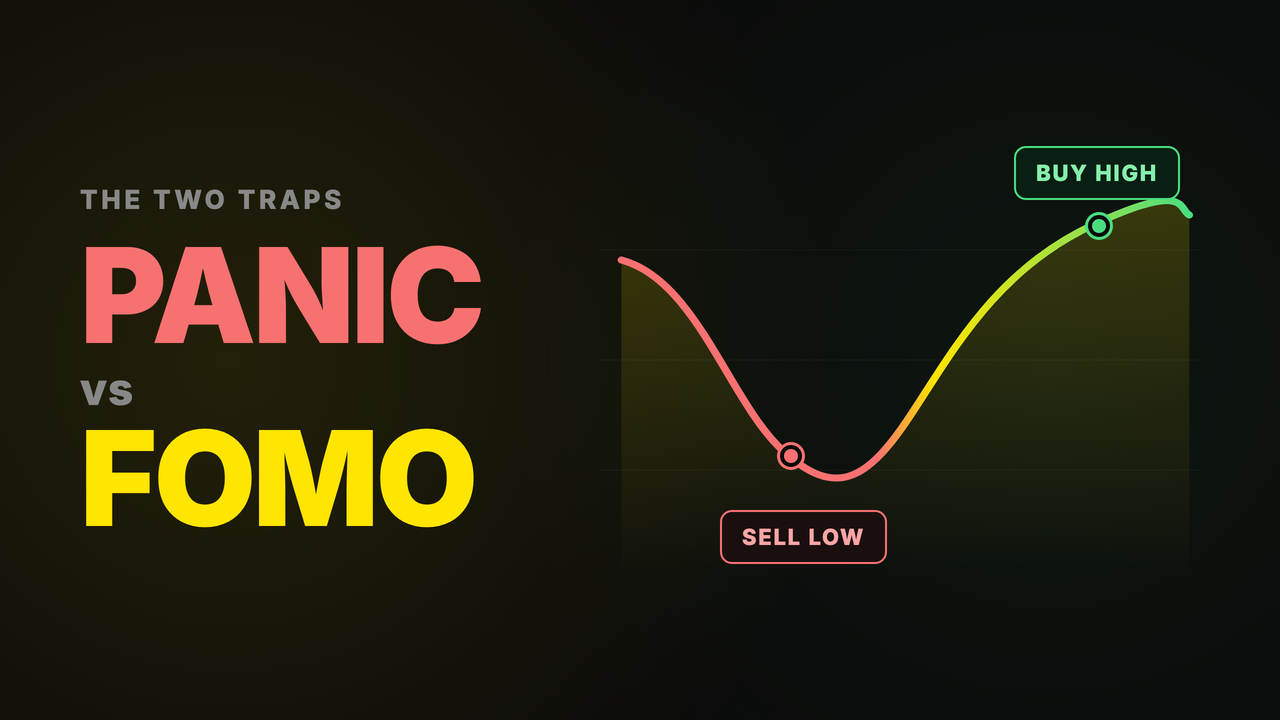
Anchoring to your entry price is one of the most expensive mistakes in investing. It keeps people in positions long after the reason to hold them has gone, purely so they can avoid booking a loss on paper. I wrote about that trap in more detail in why your entry price does not matter, and about the wider pattern of selling on emotion in panic selling versus FOMO buying.
So I would rather take the loss, accept this one did not work out, and put the money somewhere I actually want it. Defence was always the odd one out in a portfolio built around technology, and an order book that hinges on which way a budget decision goes is a risk I would rather not carry.
Where the money went
Some of it went into a small starter position in SpaceX, which only recently went public. I am keeping it deliberately small and adding slowly. It is speculative rather than a core holding, but Starlink turning into global internet infrastructure is a long-term story I want a foot in. If you are weighing it up, I broke down what you actually own and the ways to buy it in my SpaceX IPO piece.
A good company and a good holding are not the same thing. The first is about the business. The second is about the risks you are willing to carry to own it. Rheinmetall was still the first. It had stopped being the second.
The real decision underneath both
Held one, sold the other, same week, same logic. Micron carries a risk I understand and accept: it is a cyclical, volatile chip business, and it will have ugly stretches. Rheinmetall carried a risk I would rather not own: a single government's budget line that can change overnight and that I cannot research my way around.
Both can be good companies at the same time. Only one was a good holding for me. The job is to be honest with yourself about which risks you are taking on, and to keep only the ones you can live with.
I run this portfolio in the open
Every position I hold is visible on eToro, and any trade I open or close is reflected there. If you want to see how I actually hold and sell rather than just read about it after the fact, you can follow it here.
View My eToro PortfolioCopy Trading does not amount to investment advice. The value of your investments may go up or down. Your capital is at risk. Sponsored link.
Frequently Asked Questions
Not as a blanket rule. Selling at a loss makes sense when the reason you bought the stock no longer holds, or when a risk you cannot manage has shown up. Freeing the capital for a better fit is a decision, not a failure. What you should not do is dump a good business purely because the price is down.
I separate two questions: is this still a good company, and is this still a risk I want in my portfolio. If the business is fine but the risk profile has changed in a way I cannot live with, I sell, even at a loss. If both still hold, I keep it, even through a bad stretch.
Single-customer risk is when a large share of a company's revenue depends on one buyer, sometimes a single government. If that buyer cancels or shrinks an order, the share price can move violently regardless of how well the business is run. No amount of financial research flags it in advance, because it is a decision made outside the company.
Not necessarily. Some risks cannot be researched ahead of time. Taking the loss and redeploying the money can be the right call even when the original decision to buy was reasonable. Being wrong is buying without a thesis. Selling when a risk you did not sign up for appears is just managing the position.
Disclaimer: This is my personal opinion and how I am approaching things, not investment advice. Do your own research. When investing, your capital is at risk and you may get back less than you invested. Past performance is not a guarantee of future results. This article contains affiliate links, and I may earn a commission if you sign up through them, at no extra cost to you.
eToro is a multi-asset investment platform. The value of your investments may go up or down. Your capital is at risk. Copy Trading does not amount to investment advice. The value of your investments may go up or down. Your capital is at risk. Past performance is not an indication of future results.