Earlier this year, I had to leave the UAE and return to Europe much sooner than planned. My wife and I had a newborn baby, and a crisis situation made it clear that our priority was getting the family somewhere safe. In moments like that, you do not think about portfolio returns or market timing. You think about what matters most.
But once the dust settled, I found myself reflecting on something I had been building toward for years: a portfolio and financial setup that could handle exactly this kind of disruption. That is what diversification really means. Not just owning different stocks, but structuring your entire financial life so that no single event can take everything away from you.
Why Diversification Matters More Than Ever
Most people think diversification means owning a few different stocks or maybe mixing in an ETF alongside individual positions. That is a good start, but it barely scratches the surface, and even a broad index fund is more concentrated than it looks. True diversification goes much deeper than asset allocation within a single brokerage account.
When I think about diversification now, I think about it across four dimensions. Each one protects against a different kind of risk, and missing even one can leave you exposed when things go wrong.
Asset classes
Stocks, ETFs, real estate, crypto, P2P lending, and cash. When one asset class drops, others may hold or rise. This is the most common form of diversification, but on its own it is not enough.
Currencies
Holding assets in multiple currencies (USD, EUR, AED) protects against a single currency weakening. If all your wealth is in one currency, you are fully exposed to its fluctuations.
Countries
Having financial ties in multiple jurisdictions means you are not dependent on the economic or political stability of any single country. Property, bank accounts, and investments spread across borders give you options.
Institutions
Using multiple banks and brokerages protects against a single point of failure. If one institution freezes your account or has a technical outage, you still have access to your money through the others.
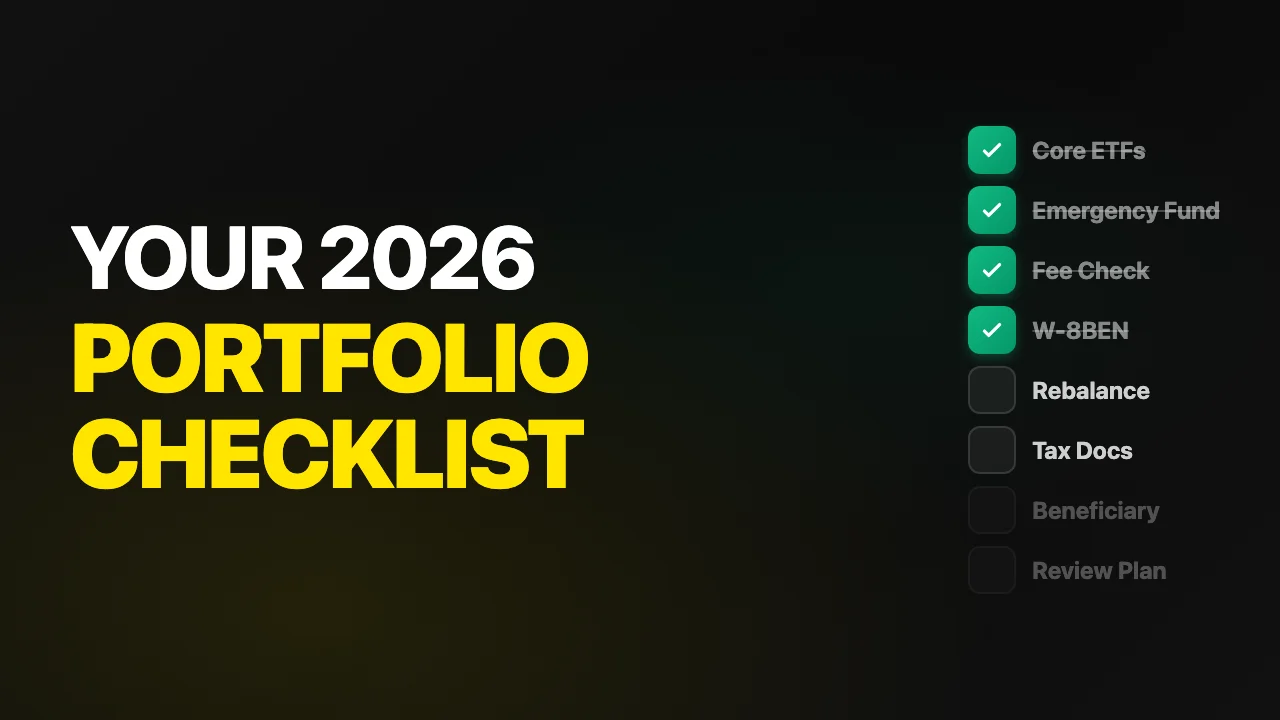
The crisis I went through reinforced all of this. It was not theoretical anymore. Having assets in multiple countries and access to different bank accounts in different jurisdictions gave me options when I needed them most. I recently wrote about what oil over $100 means for your portfolio and why this kind of setup matters more than ever right now. If you want a practical framework to review your own setup, I put together a portfolio checklist that covers the essentials.
How I Spread My Net Worth
My Diversification Breakdown
Here is how I currently think about spreading my net worth across different asset classes. I hold individual stocks, primarily US and UAE listed companies. I have ETFs that give me broad market exposure. I hold some crypto, mainly Bitcoin and Ethereum, stored on a hardware wallet for security. I own real estate in two different countries. I have money in P2P lending platforms like Go & Grow (formerly Bondora Go & Grow) for alternative income. And I keep a meaningful cash reserve across four different bank accounts. Since writing this, I sold my Bitcoin position and moved that capital into stocks and cash.
On the currency side, my income and assets are split between US dollars and euros. This is not an accident. If the dollar weakens significantly, my euro-denominated assets hold their value, and vice versa. On the country side, I have financial ties to both the UAE and Lithuania, which means I am not entirely dependent on the economic or political stability of any single jurisdiction.
The bank diversification part might sound excessive, but I use four different banks. If one has an issue, whether that is a technical outage, a compliance freeze, or something worse, I still have access to my money through the others. It costs me nothing extra to maintain these accounts, and the peace of mind is worth it.
I also spread my investments across three different brokerages: eToro, Trading 212, and Interactive Brokers. Each one serves a different purpose, and if one ever has an issue, I still have full access to my portfolio through the others. If you are looking for options, I compared the best brokers for European investors in 2026.
eToro is a multi-asset investment platform. The value of your investments may go up or down. Your capital is at risk. Sponsored link.
Cash as Optionality
One of the most underrated parts of my portfolio is the cash allocation. I know that holding cash feels unproductive, especially when markets are going up and inflation is eating into its value. But cash is not just money sitting idle. It is optionality.
When markets dip, the people who benefit the most are those who actually have money available to deploy. Building that reserve is a long game, the kind of patient wealth accumulation I explore in why the first €100K takes longest. If you are fully invested at all times, you are just along for the ride. You cannot take advantage of fear-driven sell-offs or buy high-quality assets at a discount.
The key is making your cash work while you wait. I keep a portion of my reserves in Go & Grow, which pays 6% interest with daily payouts and no lock-up period. That way my cash is earning a return while staying liquid enough to deploy when opportunities appear. I wrote a full Go & Grow review if you want the details.
This month, I deployed the most cash I have ever put into the stock market in a single period. That was only possible because I had been building up reserves over the previous months. The market gave me an opportunity, and I had the ammunition to act on it. That would not have happened if I had been 100% invested. If you want to see exactly what happened, I covered the full story in my article about losing $52,000 in one week. And if you want the psychology side of this, I also wrote about avoiding the two emotional traps in volatile markets, and why good stocks always feel too expensive when prices run higher than your entry.
Real Estate Across Borders
Real estate has been my best-performing asset class so far, and I own property in two countries. In the UAE, I have two apartments that generate rental income and have appreciated significantly in value. In Lithuania, I have property that provides a foothold in the European market.
The key benefit of holding real estate in different countries is that the markets move independently. Dubai property values are driven by different forces than Lithuanian property values. They respond to different economic conditions, different interest rate environments, and different supply and demand dynamics. When one market cools, the other might still be performing well.
Real estate also gives you something that stocks and ETFs do not: a physical asset that you can live in or rent out regardless of what financial markets are doing. During times of uncertainty, that tangibility provides genuine comfort.
Why I Am Bullish on AI Long-Term
Despite the short-term market volatility, I remain very bullish on AI and the broader compute theme over the long term. This conviction is largely inspired by a concept from Jensen Huang, the CEO of Nvidia, who frames it simply: compute equals GDP. The idea is that as computing power grows, economic output grows with it. AI is the current accelerator of that equation.
This is also why I sold my ETFs and moved into individual stocks that benefit from this trend. That said, if you prefer a more hands-off approach, there are plenty of ways to invest without picking individual stocks. What gives me confidence is not just the theory. It is the actual spending. The major hyperscalers, Google, Amazon, and Microsoft, are collectively deploying hundreds of billions of dollars into AI infrastructure. These are not speculative startups making promises. These are the most profitable companies in the world making massive capital commitments because they see the demand firsthand.
When companies of that scale are spending at that level, it tells you something about where the world is heading. I want to be positioned on the right side of that trend, which is why I continue to hold and add to positions that benefit from the growth in AI infrastructure and compute demand.
Three UAE Stocks I Bought During the Dip
When the market pulled back, I took the opportunity to add three new positions on the UAE stock exchange. All three are established companies with strong dividend yields, which fits my approach of focusing on growing income rather than chasing percentage returns.
| Company | Sector | Dividend Yield |
|---|---|---|
| Emaar Properties | Real Estate | ~7% |
| e& (Etisalat) | Telecom | ~4.5% |
| First Abu Dhabi Bank | Banking | ~4.5% |
The first is Emaar Properties, the company behind some of Dubai's most iconic developments including the Burj Khalifa and Dubai Mall. Emaar is one of the largest property developers in the region, and at the price I bought it, the stock offers a dividend yield of around 7%. For a company with that kind of asset base and track record, I found that very attractive.
The second is e&, formerly known as Etisalat, the largest telecommunications company in the UAE. Telecoms tend to be stable, cash-generating businesses with predictable revenue streams. e& offers a dividend yield of approximately 4.5%, and I see it as a dependable income producer in my portfolio.
The third is First Abu Dhabi Bank, commonly referred to as FAB. It is the largest bank in the UAE by assets and one of the most significant financial institutions in the Middle East. FAB also offers a dividend yield in the range of 4.5%. Banking in the UAE benefits from the country's strong economic position and growing role as a global financial hub.
All three of these positions align with my broader strategy: buy quality companies during pullbacks, collect meaningful dividends, and focus on growing total income over time. I care less about whether a stock returns 15% or 20% in a given year and more about whether my overall income from investments keeps increasing. You can see my full holdings and how these fit in my February 2026 portfolio update.
Key Takeaways
- Diversification goes beyond stocks: think asset classes, currencies, countries, and institutions
- Holding cash is not a waste. It gives you optionality when markets dip
- Real estate in multiple countries provides uncorrelated returns and tangible security
- Using multiple bank accounts and brokerages protects against single points of failure
- Buy quality during pullbacks and focus on growing income, not chasing returns
The Bottom Line
A crisis does not give you new ideas. It shows you whether the ideas you already had were good ones. In my case, spreading my assets across multiple countries, currencies, banks, and asset classes was not just a theoretical exercise. It was a structure that actually worked when things got difficult.
If you only take one thing from this, let it be this: diversification is not just about your stock portfolio. Think about your currencies, your geography, your institutions, and your cash reserves. Build a financial life that no single event can break. And when the market gives you a dip, make sure you have the cash to take advantage of it. If you are not sure where to start, my portfolio checklist walks through the essentials, and you will want to avoid the common investing mistakes that trip people up along the way.
Frequently Asked Questions
I use three, but two is a reasonable minimum. The goal is to avoid having all your investments locked in a single institution. If one broker has an outage or freezes your account, you can still access your money through the other. The cost of maintaining an extra account is usually zero, so the downside is minimal.
Not at all. Even with a small portfolio, you can hold stocks listed in different countries, use a broker that gives you access to global markets, and open a bank account that holds multiple currencies. You do not need to own property abroad to benefit from geographic diversification.
There is no perfect number, but I aim to keep enough that I can act when markets pull back significantly. Beyond my emergency fund of 3 to 6 months of expenses, I keep additional cash earning interest in platforms like Go & Grow so it is not losing value while I wait.
Yes. Even if your income is in one currency, buying assets denominated in other currencies gives you exposure. For example, if you are a euro earner buying US stocks, you automatically have USD exposure. The key is being aware of this rather than ignoring it.
Thinking that owning 20 different stocks means they are diversified. If all 20 are US tech stocks held at one broker in one currency, you are concentrated in multiple ways. Sector risk is especially real right now, as the software sector has been hit hard in 2026. True diversification means spreading across asset classes, currencies, geographies, and institutions.
Disclaimer: This article is for educational purposes only and does not constitute financial advice. When investing, your capital is at risk. You may get back less than you invested. Past performance is not a guarantee of future results.
This article contains affiliate links, meaning I may earn a small commission if you sign up through them, at no additional cost to you. eToro is a multi-asset investment platform. The value of your investments may go up or down. Your capital is at risk.