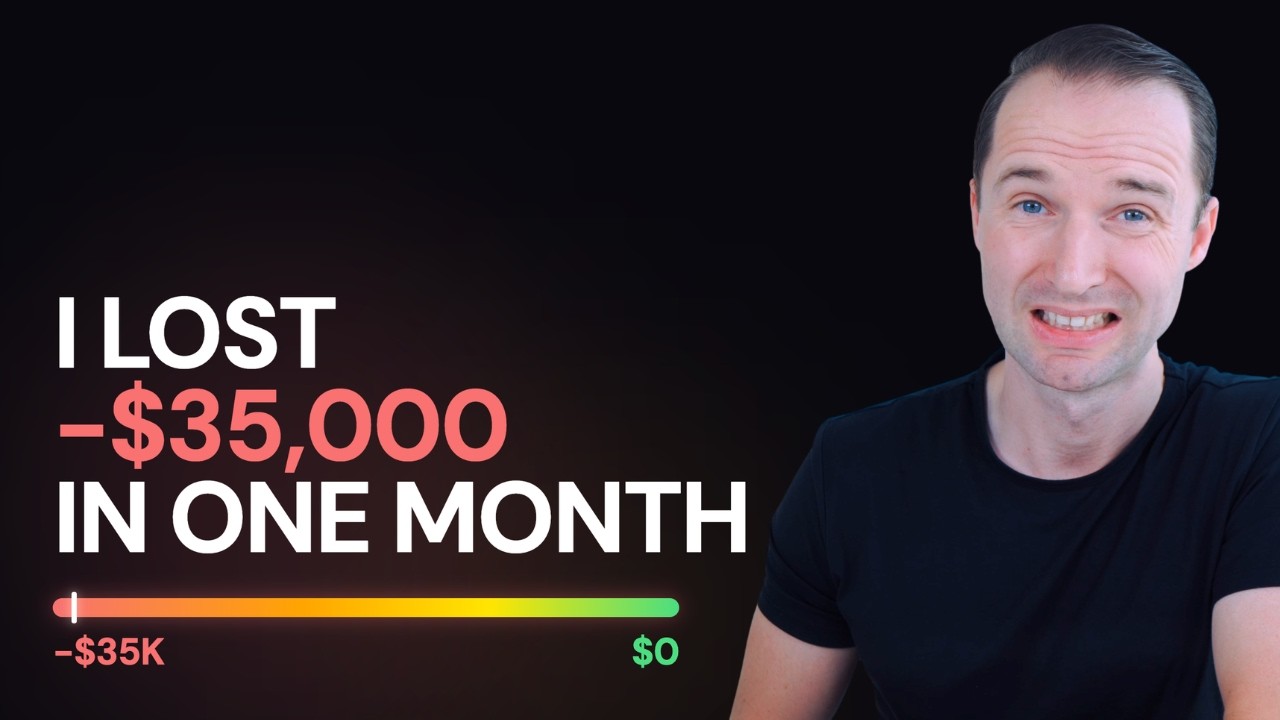
March 2026 was my biggest buying month ever. The portfolio dropped 4.7%, losing $13,020 in value, and this marks the fifth consecutive red month. But rather than sitting on the sidelines, I used the pullback as an opportunity to deploy more capital than any other month since I started investing. The combined portfolio now sits at $336,327.
This month also brought some major personal changes. The Iran situation escalated further, and my family and I made the decision to temporarily relocate from Dubai to Barcelona. That geopolitical uncertainty hit UAE stocks particularly hard, which created buying opportunities I could not ignore. If you want to see how I think about diversification during periods of crisis, I wrote a full breakdown of my approach.
Portfolio Overview: $336K After Five Red Months
The combined portfolio now stands at $336,327, with approximately $30,000 in total gains. I started tracking everything in 2023 at $48,000, so the trajectory is still firmly positive despite five months of declining values. If you are still early in your investing journey, I wrote about why the first €100K takes the longest and how the compounding effect accelerates from there.
The asset allocation currently breaks down as follows: crypto at 35% (mostly Bitcoin), stocks at 35%, ETFs at 20%, and P2P lending at 10%. Across brokers, eToro holds 28% of the total portfolio, my Ledger hardware wallet holds 27.5% in Bitcoin, Interactive Brokers holds 17.6% across my two IBKR accounts, and Trading 212 accounts for 8.4%.
eToro is a multi-asset investment platform. The value of your investments may go up or down. Your capital is at risk. Sponsored link.
My next major goal is hitting $250,000 on eToro to unlock Diamond member status, which comes with additional platform perks and benefits.
Stocks: My Biggest Buying Month Ever
March was by far the most active buying month I have had since I started investing. I added to existing positions in Taiwan Semiconductor, Interactive Brokers, Micron, and Allegheny Technologies (ATI). I also opened three entirely new positions: Rheinmetall, First Abu Dhabi Bank, and Emirates Telecommunications (e&).
The standout move was doubling down on Emaar Properties with two separate purchases after the stock dropped 23%. I added almost 1,000 shares across both buys. When a company like Emaar, the developer behind the Burj Khalifa and Dubai Mall, drops that much on sentiment rather than fundamentals, that is exactly the kind of opportunity I want to take advantage of.
Most of my stock positions were in the red this month, but the few green names were encouraging. The fact that a brand-new position like First Abu Dhabi Bank was already up 3.9% within weeks of buying gave me confidence in the thesis. If you want to learn more about how I pick stocks, Seeking Alpha has been a valuable research tool for me.
UAE Stocks: Buying the Fear
The Iran situation caused an outsized impact on UAE-listed stocks. Emaar Properties, First Abu Dhabi Bank, and Emirates Telecommunications all saw sharp declines driven by geopolitical sentiment rather than any deterioration in business fundamentals. For context, my family and I relocated to Barcelona temporarily as a precaution, so I experienced this uncertainty firsthand.
Emaar Properties
Emaar is the real estate giant behind the Burj Khalifa and Dubai Mall. A 23% drop in one month is significant, but nothing about the underlying business has changed. Dubai's real estate market remains strong, and Emaar continues to report solid financials. I doubled down with almost 1,000 additional shares across two separate purchases because I believe this is a sentiment-driven dip, not a fundamental one.
First Abu Dhabi Bank (FAB)
This is a new position opened in March. FAB is the largest bank in the UAE by assets, and it pays a healthy dividend. As a long-term hold for UAE growth exposure, it fits well alongside my Emaar position. The stock was already up 3.9% by the end of the month.
Emirates Telecommunications (e&)
Another new position. e& is one of the largest telecom companies in the Middle East and also pays a solid dividend. Telecoms tend to be defensive holdings that perform well in uncertain environments, making this a good addition during a turbulent period. Both FAB and e& are long-term holds that I plan to build over time.
I am very bullish on a UAE market comeback once the geopolitical situation calms down. The fundamentals of these companies have not changed. Emaar is still developing world-class real estate, FAB is still the largest bank in the country, and e& still dominates the telecom space. Buying when fear is at its peak has historically been a rewarding strategy for long-term investors.
ETFs: The Quiet Performers
My S&P 500 UCITS ETF and NASDAQ 100 ETF together make up around 20% of the total portfolio. Despite the broader market volatility, these broad-based funds continued to prove the value of diversification. Individual stocks swung wildly in both directions, but the ETFs absorbed the shock and held up relatively well.
One milestone worth noting is that my S&P 500 ETF now pays over $800 per year in dividends. That is completely passive income generated by simply holding a broad market index. For anyone unsure about picking individual stocks, ETFs remain one of the simplest and most effective ways to build wealth over time. Worth noting though, even when the cash starts rolling in, I don't pick stocks for their yield, total return is the only number I track.
Bitcoin: The Calmest Asset This Month
Ironically, Bitcoin was my calmest asset in March. It finished the month up 2.6%, which is a welcome change from the volatility we saw earlier in the year. My Bitcoin allocation sits at approximately 35% of the total portfolio, valued at around $116,000 to $117,000. Overall, I am up roughly 14% on my Bitcoin position.
The entire Bitcoin holding is stored on a Ledger hardware wallet for full self-custody. I am considering moving some to Interactive Brokers, which recently launched a crypto custody feature. Having the option to hold Bitcoin within a regulated brokerage is appealing for portfolio management purposes.
I am not adding more Bitcoin from my own capital at this point. At 35% of the portfolio, the concentration is already high enough. I would rather deploy fresh capital into stocks where I see more compelling entry points right now.
One small highlight: my Nexo position is now up over 100% since I bought it. It remains a tiny allocation, but the return has been impressive.
P2P Lending and Interest Income
When stocks are falling and crypto is flat, it is reassuring to have income streams that pay regardless of market direction. I currently earn interest from three places: a UAE bank account at 6%, Go & Grow (formerly Bondora Go & Grow) at approximately 6%, and Monefit SmartSaver at 7.5%.
Combined, Go & Grow and Monefit generate roughly €2,000 per month in daily interest. The daily payouts break down to approximately €2.45 from Go & Grow and €3 from Monefit. That money compounds every single day, regardless of what happens in the stock market. I wrote a detailed Go & Grow review if you want to understand how the platform works.
Monefit SmartSaver
I currently have €14,600 invested in Monefit SmartSaver, earning 7.5% annually with daily payouts. This accounts for 27.3% of my total passive income. I added an additional €2,000 to Monefit this month because the risk-adjusted returns are compelling. They also offer locked vaults with rates up to 10.52% for a 24-month commitment, which I am considering for a portion of my cash reserves.
Go & Grow: Liquidity When I Needed It Most
Go & Grow proved its value this month in an unexpected way. When we needed to relocate to Barcelona quickly, I was able to withdraw funds from Go & Grow within hours. That kind of liquidity in a product earning 6% annually is rare. It reinforced why I keep a meaningful allocation here, not just for the yield, but for the flexibility.
Passive Income Breakdown: $4,259 Annually
Here is how my annual passive income currently breaks down across all sources:
$4,259 per year in passive income, roughly $354 per month or $12.52 per day. That number will continue to grow as I add more capital to dividend-paying ETFs and interest-bearing accounts. Building multiple income streams has been a key part of my strategy, and months like March show exactly why it matters.
Investment Thesis and Outlook
My investment thesis remains unchanged. I am still bullish on AI and technology for the long term. Companies like Nvidia, AMD, Alphabet, Amazon, Taiwan Semiconductor, and Microsoft are building the infrastructure that will power the next decade of innovation. These are the companies I want to own.
I use AI every single day to code software, build dashboards, and create content. The productivity gains are real, and the adoption curve is still in its early stages. That conviction is what keeps me buying during drawdowns rather than selling into fear.
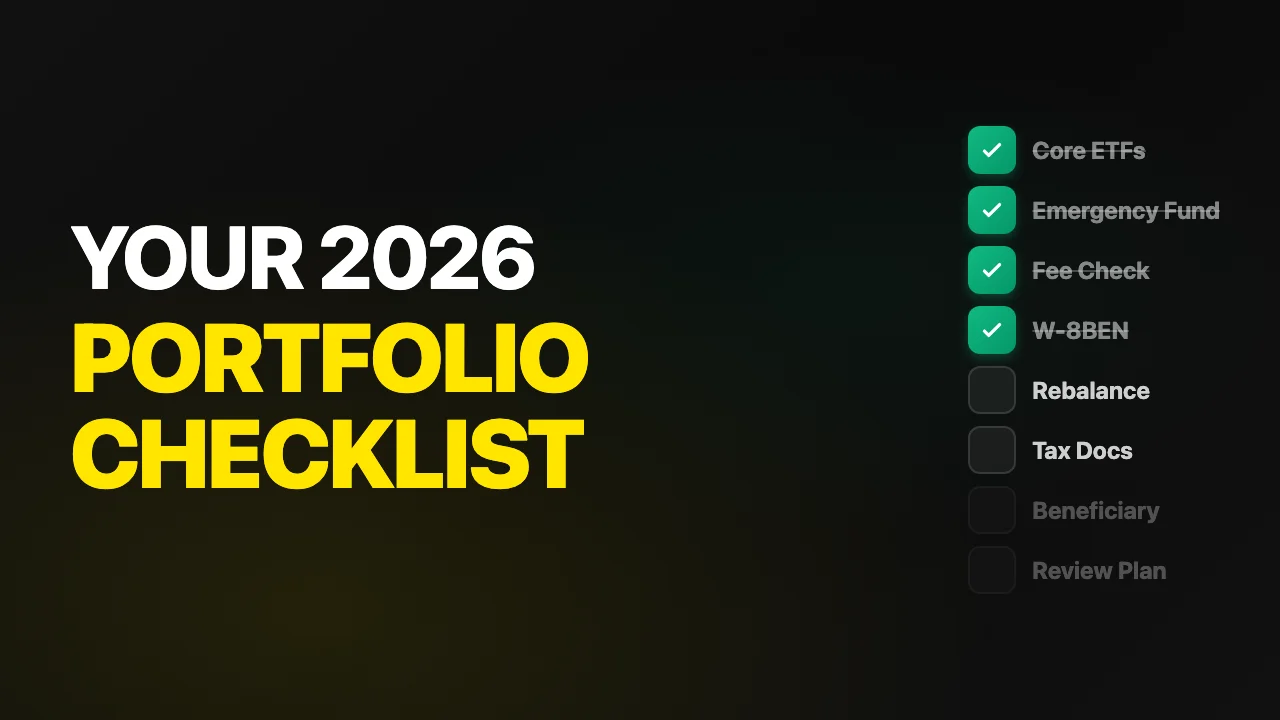
The plan going forward is simple: keep dollar cost averaging into my highest-conviction positions, maintain diversification across asset classes and geographies, and let time do the heavy lifting. My goal remains $1 million by 2031. At $336,000 today, the math says it is achievable with consistent contributions and reasonable market returns. If you are reviewing your own portfolio, my 8-point portfolio checklist is a good place to start, and make sure you are not making any of these common investing mistakes.
Frequently Asked Questions
The combination of five consecutive red months and the Iran-driven selloff in UAE stocks created what I saw as exceptional entry points. When quality companies like Emaar Properties drop 23% on sentiment alone, that is the time to be deploying capital, not running for the exits. I had cash reserves ready and used them aggressively.
It is higher than what most financial advisors would recommend. Bitcoin grew to 35% of my portfolio through price appreciation rather than me deliberately allocating that much. I am comfortable with the risk given my overall diversification across multiple asset classes, currencies, and countries, but I am not adding more at this level.
My passive income comes from multiple sources: P2P lending interest from Go & Grow (6%) and Monefit (7.5%), cash interest from a UAE savings account (6%), ETF dividends from my S&P 500 position, and smaller amounts from stock dividends and cashback. The goal is to build income streams that pay regardless of market direction.
Because the selloff was driven by fear, not by any change in the underlying business fundamentals. Emaar still develops world-class real estate, FAB is still the largest bank in the UAE, and e& still dominates telecom. Historically, buying quality companies during fear-driven selloffs has been one of the most effective long-term strategies. I believe strongly in a UAE market recovery.
I use four main platforms: eToro (28% of portfolio) for US stocks and social investing, Ledger (27.5%) for Bitcoin self-custody, Interactive Brokers (17.6%) for global markets and low FX fees, and Trading 212 (8.4%) for commission-free trading. Using multiple brokers reduces the risk of having everything at a single institution.
eToro is a multi-asset investment platform. The value of your investments may go up or down. Your capital is at risk. Sponsored link.
Disclaimer: This article reflects my personal investment experience and is not financial advice. All investments carry risk, and you may get back less than you invest. Past performance is not a guarantee of future results. Always do your own research before making investment decisions. This article contains affiliate links, meaning I may earn a small commission if you sign up through them, at no additional cost to you.
eToro is a multi-asset investment platform. The value of your investments may go up or down. Your capital is at risk.